

What Is Boho Style? Complete Breakdown and Guide
Boho style is more than a fashion choice for many british trendsetters. It signals a dedication to personal freedom and bold self-expression. With over a thousand years of history reflecting cultural fusion, this aesthetic celebrates individuality and creative rebellion. Whether you are drawn to flowing fabrics or earth-toned palettes, understanding bohemian fashion unlocks the confidence to tell your unique story through every outfit.
Table of Contents
- Defining Boho Style And Core Philosophy
- Evolution And Origins Of Bohemian Fashion
- Key Elements And Signature Features
- Popular Types Of Boho Style Outfits
- Styling Tips And Common Mistakes To Avoid
Key Takeaways
| Point | Details |
|---|---|
| Emphasis on Individuality | Boho style celebrates personal freedom and self-expression through fashion. It encourages individuals to showcase their unique identity and narrative via their clothing choices. |
| Historical Influences | Originating from the Romani people’s nomadic lifestyle, bohemian fashion has evolved over centuries, continuously adapting while maintaining its core philosophy of nonconformity. |
| Key Characteristics | The style is marked by layered, loose-fitting garments, earthy colour palettes, and vintage accessories, crafted from natural materials that encourage comfort and creativity. |
| Styling Balance | Successful boho styling requires a mix of textures and careful accessory choices, maintaining personal authenticity without overwhelming the outfit with conflicting patterns or excess. |
Defining Boho Style and Core Philosophy
The bohemian style represents far more than just a fashion trend - it’s a powerful statement of personal freedom and unconventional self-expression. According to atlantis-press, bohemian style embodies “freedom, individuality, and a non-conformist attitude” that transcends traditional fashion boundaries.
Rooted in rich cultural history, boho style emerged from the nomadic lifestyle of Romani people, capturing an essence of wanderlust and creative rebellion. Wikipedia describes this aesthetic as “boho chic,” characterized by flowing fabrics, vibrant colours, and natural materials that reflect a deeply personal countercultural ethos.
At its core, boho style is about celebrating individual identity through clothing. Key characteristics include:
- Layered, loose-fitting garments
- Mix of global textile patterns
- Natural, earthy colour palettes
- Vintage and handcrafted accessories
- Emphasis on comfort and personal storytelling
This approach to fashion goes beyond simple clothing choices - it’s a philosophical statement about rejecting mainstream conformity and embracing personal creativity. By mixing unexpected textures, incorporating global influences, and prioritizing individual expression, boho style allows people to communicate their unique narrative through what they wear.
Evolution and Origins of Bohemian Fashion
The bohemian fashion movement has a fascinating and complex historical trajectory that stretches back over a millennium. According to atlantis-press, the style originated over 1,000 years ago through the migration of Romani people from northern India to Europe, creating a distinctive clothing approach characterized by constant cultural adaptation and creative fusion.
Initially, bohemian style was more than just fashion - it represented a radical social statement. ADHT reveals how the term ‘bohemian’ evolved to symbolize artistic expression and deliberate nonconformity, transforming from a countercultural identity into a mainstream aesthetic over generations.
Key historical transformations in bohemian fashion include:
- Romani cultural influences from nomadic migrations
- 19th-century artistic movements challenging social norms
- Counterculture rebellion in the 1960s and 1970s
- Modern reinterpretation as a global fashion trend
Today, bohemian style continues to embody its original spirit of individual freedom, while simultaneously becoming a celebrated global fashion phenomenon. Boho vs Bohemian Style: Complete Guide for 2025 explores how this dynamic style maintains its rebellious roots while adapting to contemporary fashion landscapes.
Key Elements and Signature Features
Bohemian fashion is defined by its distinctive and eclectic visual language that celebrates individual expression through clothing. Wikipedia highlights that contemporary bohemian style embraces flowing fabrics, vibrant colours, and natural woven materials, drawing inspiration from counterculture movements of the 1960s and 1970s.
The signature elements of boho style go far beyond simple clothing choices, representing a holistic approach to personal aesthetic. Wikipedia describes boho-chic as a fashion style featuring layered clothing, ethnic prints, and vintage accessories that create an individualized and deeply personal look.
Central characteristics of bohemian fashion include:
- Loose, unstructured silhouettes
- Rich, earthy colour palettes
- Intricate ethnic and tribal-inspired patterns
- Layered textures and mixed fabric weights
- Handcrafted and vintage accessories
- Natural materials like cotton, linen, and raw silk
These design elements combine to create a style that is simultaneously relaxed and intentional.
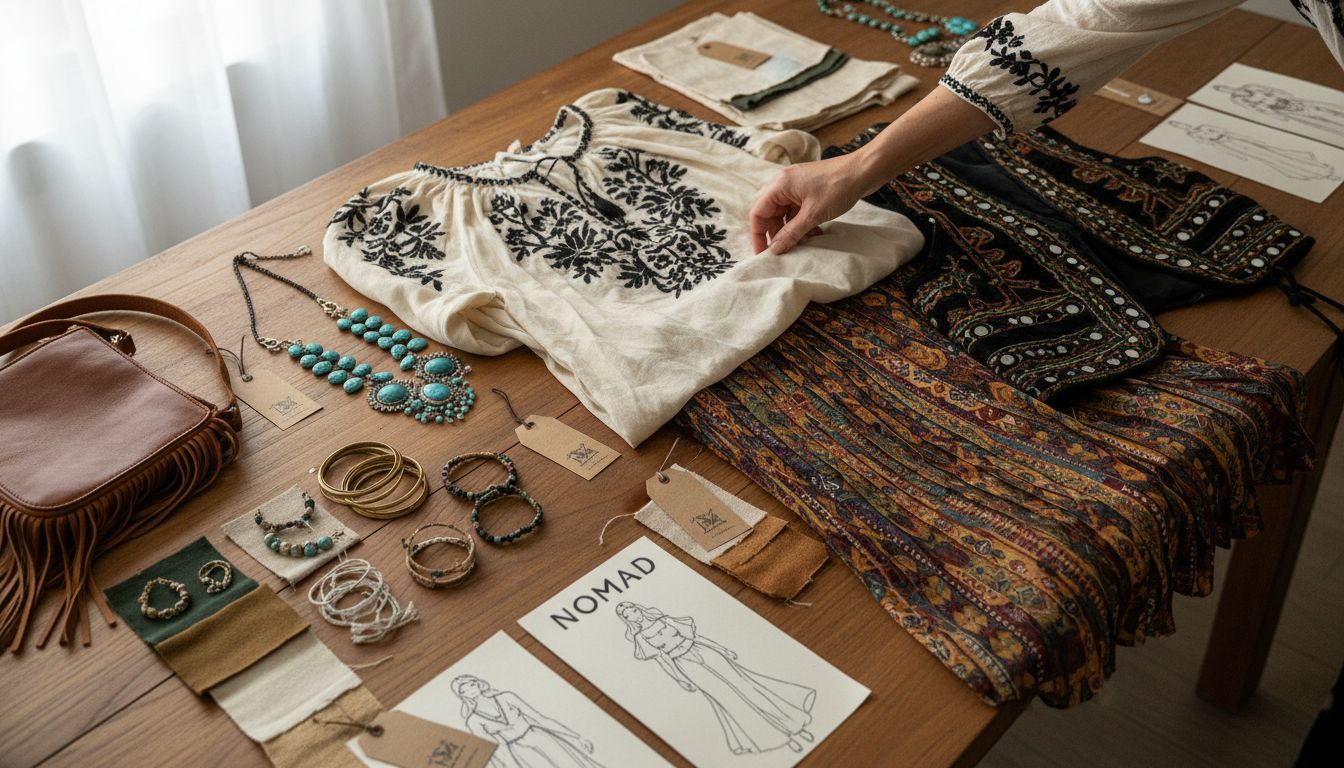 By prioritizing comfort, personal storytelling, and cultural fusion, boho fashion allows individuals to express their unique identity through clothing. Bohemian Wardrobe Essentials: Build Your Signature Style provides an in-depth exploration of how to curate an authentic bohemian wardrobe that truly reflects personal creativity.
Popular Types of Boho Style Outfits
Boho style offers a diverse range of outfit options that celebrate individual creativity and cultural fusion. Wikipedia reveals that classic boho-chic outfits typically include flowing maxi dresses, peasant blouses, and layered skirts, complemented by statement accessories like wide-brimmed hats, fringed bags, and intricate ethnic jewellery.
The versatility of bohemian fashion allows for multiple distinct interpretations. Wikipedia highlights that bohemian style outfits frequently feature loose-fitting garments in earthy tones with intricate patterns, including key pieces such as tunics, flared jeans, and embroidered vests that reflect a carefree and multicultural aesthetic.
Popular boho outfit categories include:
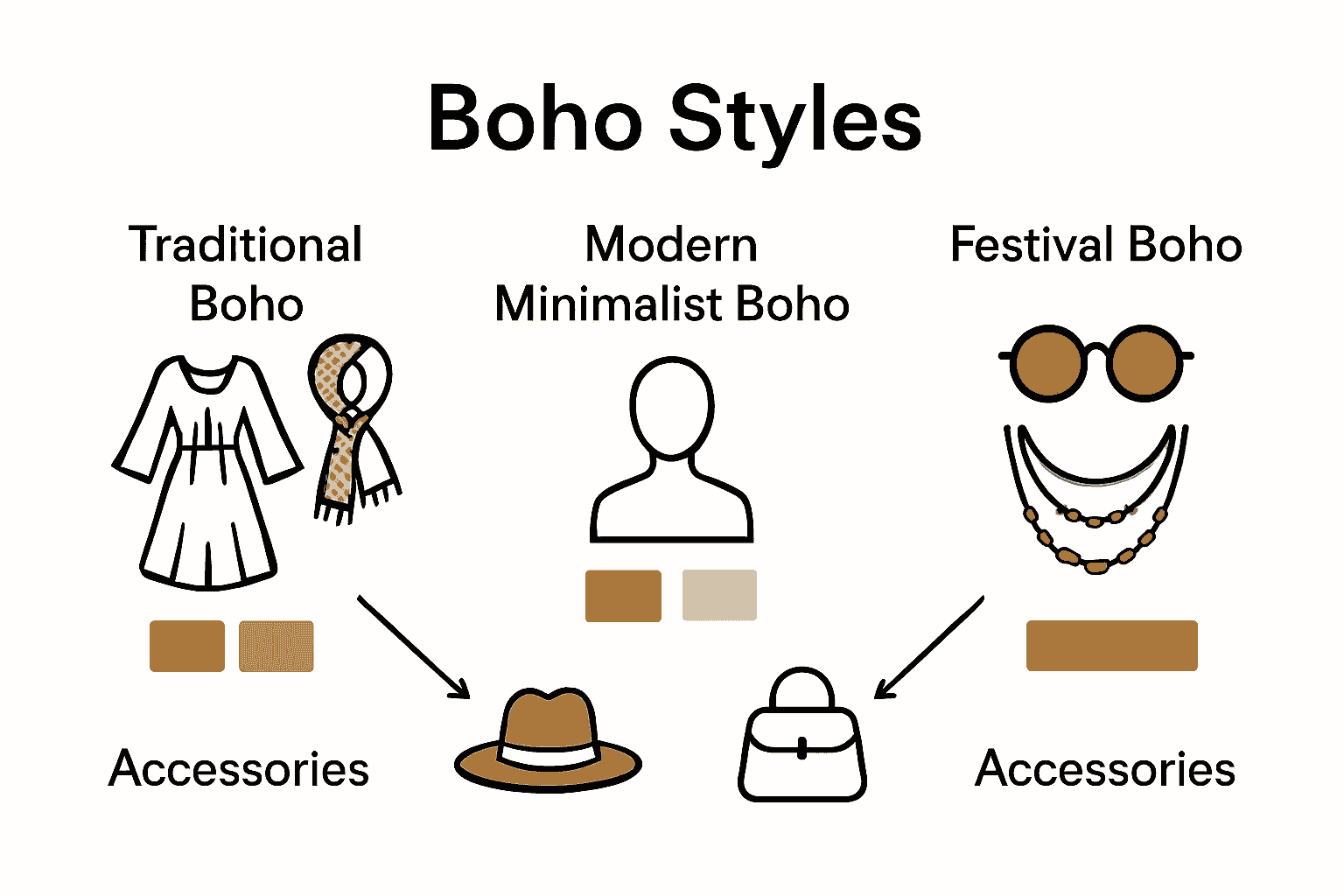
- Festival Boho: Layered, eclectic pieces with bold accessories
- Romantic Boho: Soft, flowing fabrics in pastel and neutral tones
- Modern Minimalist Boho: Streamlined silhouettes with subtle bohemian accents
- Vintage Inspired Boho: Retro prints and nostalgic textile combinations
- Global Traveller Boho: Ethnic prints and culturally inspired design elements
Each boho style variant offers a unique approach to self-expression, allowing individuals to craft a personal aesthetic that resonates with their inner spirit. 7 Inspiring Types of Boho Outfits for Effortless Style provides additional insights into creating stunning bohemian looks that feel authentic and personal.
Styling Tips and Common Mistakes to Avoid
Bohemian fashion requires a delicate balance between self-expression and cohesive styling. Wikipedia advises that achieving an authentic boho-chic look involves strategically layering different textures while being mindful not to over-accessorize or mix too many conflicting patterns that could disrupt the outfit’s harmonious aesthetic.
Wikipedia emphasizes that bohemian styling fundamentally prioritizes comfort and individuality, recommending natural fabrics, earthy colour palettes, and a thoughtful approach that respects the cultural origins of design elements. The key is creating an ensemble that feels personal and effortless, rather than contrived or costume-like.
Common boho styling mistakes to avoid include:
- Overloading on accessories
- Ignoring fabric texture and weight
- Forcing trends over personal comfort
- Neglecting fit and silhouette
- Cultural appropriation of design elements
- Losing personal authenticity in pursuit of a ‘look’
Successful boho styling is about expressing your unique narrative through clothing while maintaining a sense of intentional ease. Ultimate Boho Jewelry Styling Guide for Effortless Outfits offers additional insights into creating balanced, personalized bohemian looks that truly reflect individual style.
Embrace Your Unique Boho Style with Confidence and Comfort
Discover how you can express your individuality through the rich textures and natural colours of true boho fashion. This article explores the importance of layering, cultural patterns, and vintage accessories in crafting a personal style that transcends trends and reflects your authentic self. If you have struggled to find high-quality, affordable pieces that capture this spirit without overwhelming your look, you are not alone.
At BohoCloud, we understand these challenges and offer a curated selection of stylish boho-chic clothing along with authentic Accessories – Boho Cloud designed to help you build effortlessly balanced outfits.
Explore how our free-spirited designs embrace comfort, creativity, and individuality so you can create your own signature bohemian wardrobe today. Don’t wait to express your inner wanderer through handpicked pieces that honour the boho philosophy and contemporary style. Visit BohoCloud now and start your journey towards timeless boho elegance.
Frequently Asked Questions
What defines boho style?
Boho style is characterised by its emphasis on freedom, individuality, and non-conformity, featuring layered, loose-fitting garments, vibrant colours, and natural materials. It reflects personal creativity and storytelling through fashion.
What are the key elements of bohemian fashion?
Key elements of bohemian fashion include loose silhouettes, rich earthy colour palettes, ethnic patterns, layered textures, and handcrafted accessories made from natural materials like cotton and linen.
How can I style boho outfits effectively?
To style boho outfits effectively, focus on layering different textures, choose natural fabrics, and maintain an earthy colour palette. Ensure that your look prioritises comfort and authenticity, avoiding over-accessorising or mixing too many conflicting patterns.
What are some common boho style outfit types?
Popular types of boho outfits include Festival Boho with eclectic pieces, Romantic Boho with soft fabrics, Modern Minimalist Boho with streamlined silhouettes, Vintage Inspired Boho featuring retro prints, and Global Traveller Boho with ethnic prints.