

Boho Motifs in Textiles: The Essential Guide
Over 60 percent of british shoppers say that textured fabrics and vibrant motifs influence their fashion choices. Boho textile motifs capture more than just style trends, weaving cultural history and personal meaning into every pattern. From intricate embroidery to earthy colour palettes, exploring these designs reveals how artistry and heritage shape the modern british approach to expressive clothing and home décor.
Table of Contents
- Defining Boho Motifs In Textiles
- Identifying Key Boho Motif Types
- Recognising Materials And Embellishment Techniques
- Cultural Origins And Symbolic Meanings
- Practical Impacts Of Motif Choice
Key Takeaways
| Point | Details |
|---|---|
| Cultural Inspiration | Boho motifs are deeply rooted in global cultural traditions, using intricate designs to convey narratives of freedom and individual expression. |
| Key Characteristics | These textiles feature ethnic patterns, earthy colour palettes, and textural elements that create visual complexity and comfort. |
| Symbolic Meanings | Motifs such as the boteh and ram’s horns encapsulate themes of fertility and protection, highlighting the cultural significance behind boho designs. |
| Motif Impact | The selection of motifs in boho textiles serves as a means of personal storytelling and emotional resonance, influencing both fashion and interior aesthetics. |
Defining Boho Motifs In Textiles
Boho motifs represent a vibrant artistic expression deeply rooted in cultural storytelling and textile traditions. According to fashionabc, these textile designs are characterised by traditional hand-woven fabrics and ethnic prints that skilfully blend modern and vintage aesthetic elements, creating patterns both rugged and refined.
At its core, boho textile motifs draw inspiration from global cultural traditions, featuring intricate patterns that communicate narratives of freedom, creativity, and individual expression. These designs typically incorporate organic shapes, asymmetrical patterns, and rich textural elements that reflect a nomadic, free-spirited approach to fashion and design. silentnews highlights how these textiles emphasise comfort and fluidity, allowing for breathable, movement-friendly clothing styles.
Key characteristics of boho textile motifs include:
- Ethnic and tribal-inspired geometric patterns
- Earthy colour palettes with warm, saturated tones
- Textural elements like embroidery, tassels, and intricate weaving techniques
- Layered, overlapping design elements that create visual complexity
Understanding these motifs requires appreciating their multicultural roots and the way they transform traditional craft into contemporary fashion statements. For more in-depth exploration of boho style foundations, explore our Why Choose Boho Fashion: Complete Style Guide for additional insights into this captivating aesthetic.
Identifying Key Boho Motif Types
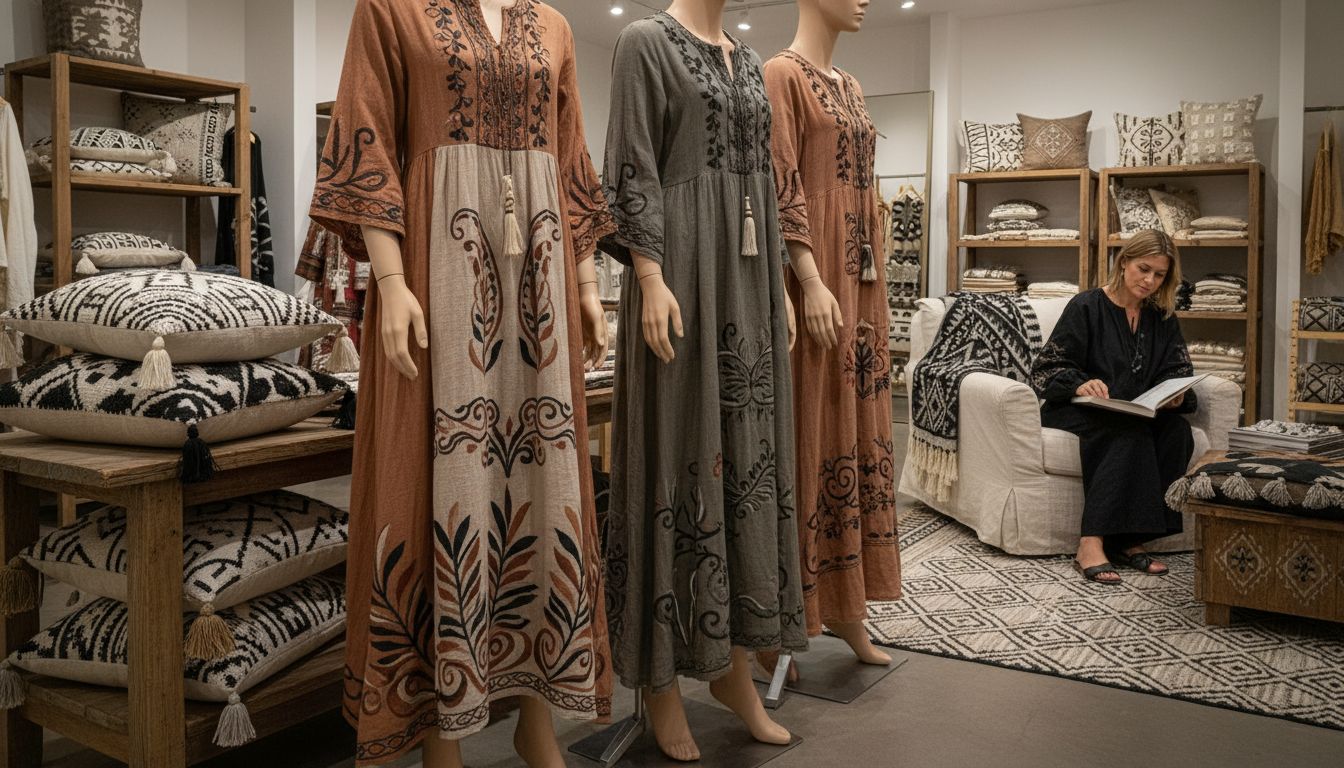
Boho textile motifs are a rich tapestry of cultural symbolism and artistic expression, each pattern telling a unique story of heritage and creativity. According to artsbma, traditional boho designs frequently incorporate profound symbolic elements like the boteh (bud) and leaf patterns, which represent fertility, and ram’s horns that draw from protective shamanistic traditions.
In the realm of vintage boho styles, styleguru highlights the emphasis on relaxed, eclectic aesthetics that blend natural fabrics, layered textures, and handcrafted details. These textile motifs are characterised by their intricate storytelling through visual design, often featuring complex narratives embedded within seemingly simple patterns.
Key boho motif types include:
- Botanical Motifs: Intricate floral and leaf designs representing growth and natural cycles
- Geometric Patterns: Asymmetrical shapes inspired by tribal and indigenous art
- Symbolic Elements: Cultural icons like ram’s horns, paisley designs, and spiritual symbols
- Nature-Inspired Textures: Organic, flowing patterns mimicking natural landscapes
For those eager to explore the nuanced world of boho style further, our What Is Boho Style? Complete Breakdown and Guide offers an in-depth exploration of these captivating design principles and their cultural significance.
Recognising Materials And Embellishment Techniques
Boho textile craftsmanship is a celebration of diverse materials and intricate embellishment techniques that transform fabric into a canvas of cultural expression. According to styleguru, boho fashion ingeniously incorporates a rich palette of textures, including crochet, linen, velvet, and leather, strategically layered to create profound visual depth and tactile intrigue.
Traditional craftsmanship plays a pivotal role in boho textile design, with each technique carrying deep cultural significance. designforsocialchange highlights the Wollo Gabi, an Ethiopian handwoven fabric, as a quintessential example of how intricate patterns and symbolic embellishments can communicate complex narratives through textile art.
Key materials and embellishment techniques in boho textiles include:
- Natural Fibres: Cotton, linen, silk, and wool
- Handcrafted Techniques: Embroidery, macramé, crochet, and hand-weaving
- Surface Embellishments: Tassels, beadwork, appliqué, and intricate stitching
- Layering Techniques: Combining multiple textures and fabrics for visual complexity
To delve deeper into the world of boho accessories that complement these rich textile traditions, explore our 7 Essential Boho Jewellery Styles Every Woman Should Know guide, which offers additional insights into the complementary elements of boho fashion.
Cultural Origins And Symbolic Meanings
Boho textile design is a profound narrative of cultural heritage, weaving together symbolic representations that transcend mere aesthetic expression. artsbma reveals how ikat patterns carry deep cultural significance, with motifs like the boteh (bud) and ram’s horns symbolising fundamental human experiences of fertility and protection, creating a visual language that speaks to our most primal connections.
Traditional textile craftsmanship represents more than decorative art; it is a sophisticated method of cultural storytelling and preservation. designforsocialchange exemplifies this through the Wollo Gabi, an Ethiopian fabric that transforms intricate patterns into a complex narrative of regional heritage, demonstrating how textile design can communicate generations of cultural wisdom and social understanding.
Key symbolic elements in boho textile traditions include:
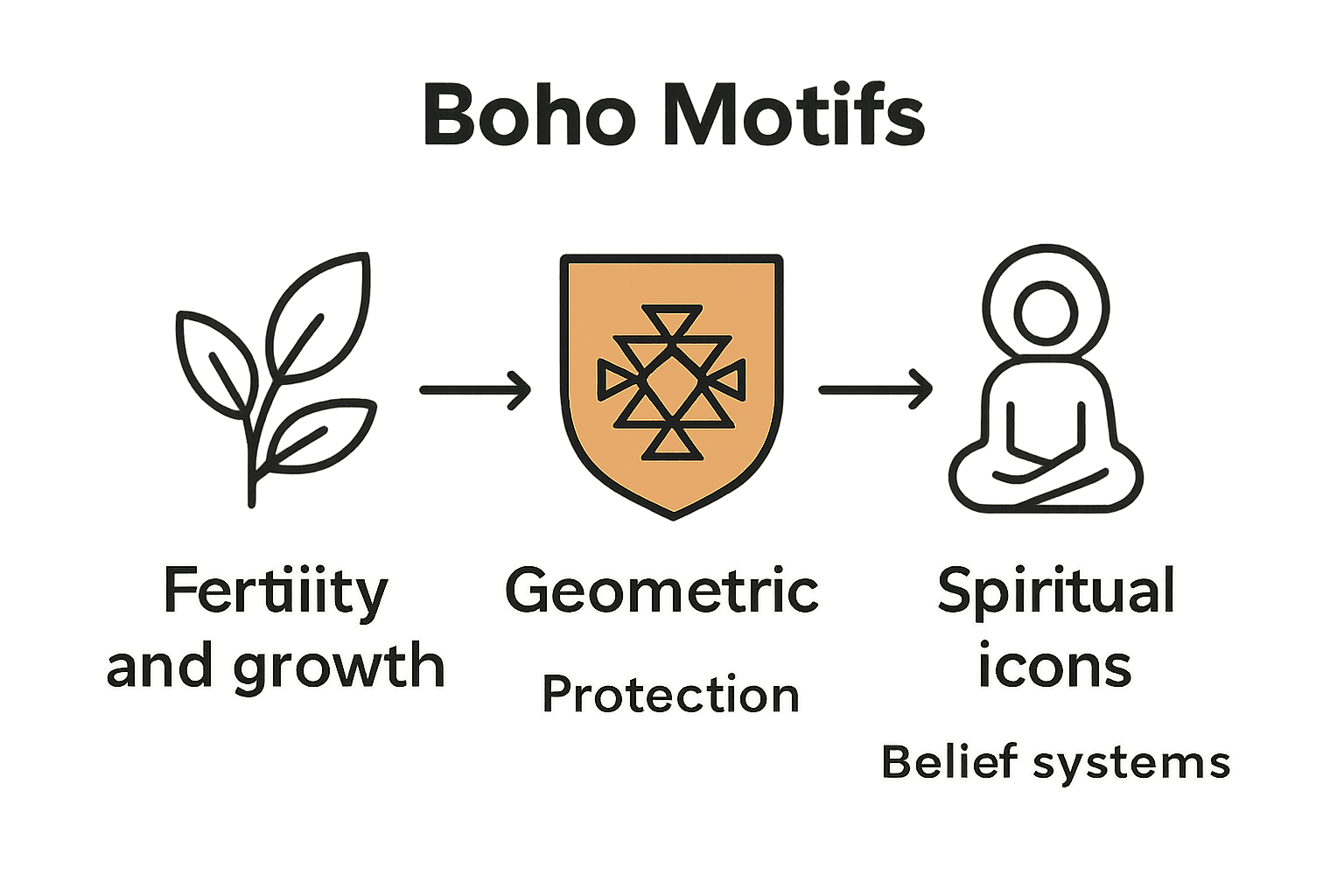
- Fertility Symbols: Botanical motifs representing growth and regeneration
- Protective Icons: Geometric patterns and animal-inspired designs signifying safety
- Spiritual Representations: Intricate weaving techniques reflecting metaphysical beliefs
- Ancestral Narratives: Patterns that encode familial and community histories
To explore the deeper connections between cultural expression and personal style, check out our What Is Boho Style? Complete Breakdown and Guide for a comprehensive exploration of these rich textile traditions.
Practical Impacts Of Motif Choice
Motif selection in boho textiles transcends mere aesthetic decoration, serving as a powerful tool for personal expression and visual communication. styleguru highlights how strategic incorporation of diverse textures and patterns - ranging from crochet and linen to velvet and leather - enables the creation of a distinctive fusion style that masterfully balances boldness with harmonious design.
The transformative power of motif choice extends far beyond individual garments, influencing broader design narratives and personal identity. fashionabc emphasises that mixing different prints and fabrics in boho aesthetics creates an eclectic approach that adds profound depth and nuanced personal expression to both fashion and interior design environments.
Practical considerations in motif selection include:
- Emotional Resonance: Choosing patterns that reflect personal narrative and cultural connection
- Versatility: Selecting motifs that transition seamlessly across different styling contexts
- Visual Complexity: Creating layered visual experiences through thoughtful pattern combinations
- Personal Storytelling: Using textile choices as a form of non-verbal communication
To dive deeper into understanding how these design principles manifest in personal style, explore our Boho vs Bohemian Style: Complete Guide for 2025 for comprehensive insights into textile expression.
Embrace Your Unique Boho Story Through Textiles and Style
Boho motifs in textiles unlock powerful stories of culture, freedom, and personal expression. If you seek to wear your story boldy while enjoying comfort and quality, our Tops collection offers beautifully crafted pieces that reflect the essence of boho textile artistry. Experience designs inspired by natural fibres, intricate patterns, and layered textures that speak to your individuality and creativity.
Discover how effortless it is to blend meaningful motifs into modern fashion with BohoCloud. Shop now to find unique boho-chic garments including relaxed layers from our Cardigans range. Take your style beyond trends and express your personal narrative with pieces designed to inspire confidence and comfort today.
Frequently Asked Questions
What are boho motifs in textiles?
Boho motifs in textiles refer to vibrant designs inspired by global cultural traditions, featuring intricate patterns that express narratives of freedom and creativity. They often combine modern and vintage elements into unique textile art.
What materials are commonly used in boho textiles?
Boho textiles typically utilise natural fibres such as cotton, linen, silk, and wool, alongside various handcrafted techniques like embroidery, macramé, and crochet to create depth and texture in designs.
How do boho motifs reflect cultural symbolism?
Boho motifs often include symbolic elements like botanical designs related to growth or ram’s horns representing protection. These patterns are steeped in cultural heritage, transforming textiles into storytelling mediums that convey significant meanings.
What are the benefits of using boho textile designs in fashion?
Using boho textile designs in fashion allows for personal expression through unique patterns and textures. They create an eclectic aesthetic that balances boldness with comfort, emphasising individuality in both clothing and home decor.